


What Makes hōmhub Different?
Real estate has plenty of websites for finding a home. What it hasn’t had is a platform designed around what happens before, during, and long after the transaction. That is the difference with hōmhub.
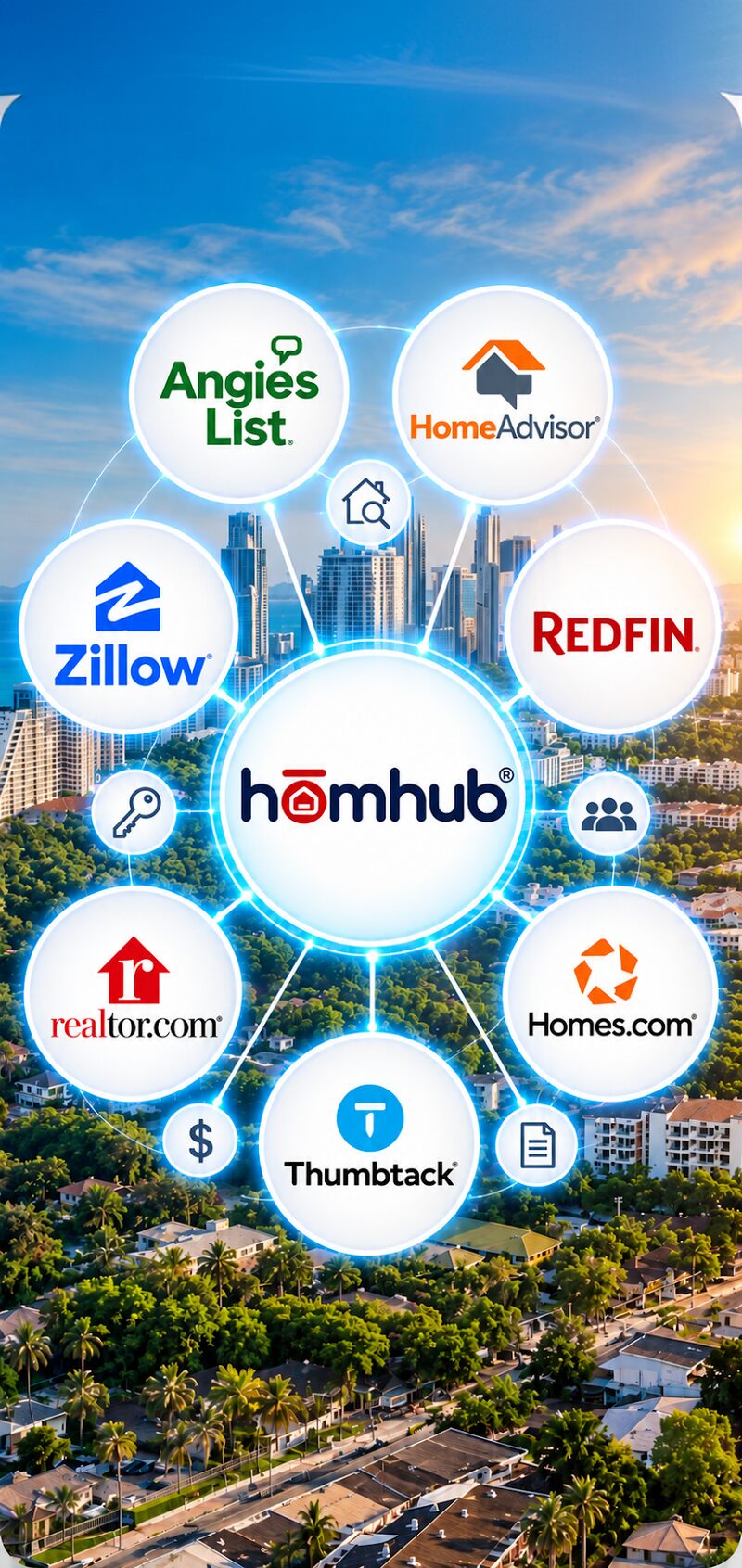
Traditional real estate portals such as Zillow, Realtor.com, Homes.com, and Trulia largely built their businesses around the top of the real estate funnel: Search for a property, view a listing, connect with an agent or service provider. Some platforms have expanded deeper into mortgages, rentals, transactions, and related services. But the industry still largely treats the closing table as the finish line.
For the consumer, it’s actually the starting line.
Once you own the home, an entirely new journey begins. There are mortgage payments, insurance, taxes, maintenance, repairs, renovations, contractors, warranties, valuations, refinancing, equity decisions, and eventually, perhaps, renting or selling the property. Today, those needs are typically scattered across different companies, websites, apps, professionals, and databases.
Real estate has digitized, but it hasn’t truly connected.
That fragmentation is the opportunity hōmhub was created to address. Rather than positioning itself as another real estate portal, hōmhub is building a new category: an AI-Powered Homeownership Operating System (hOS) designed to connect the entire lifecycle of homeownership:
Search. Buy. List. Rent. Sell. Finance. Manage. Maintain. Service. Own.
The distinction matters. A portal primarily helps you navigate a marketplace. An operating system is intended to connect the tools, information, services, people, and actions required to accomplish something. In hōmhub’s case, that “something” is not merely finding a house. It is navigating homeownership itself.
And, AI changes how that experience can work. Instead of forcing consumers to understand which website, menu, professional, or service they need first, hōmhub is being built around conversation. Ask what you want to accomplish, get relevant information, discover options, connect with the appropriate professionals, and move toward the next action from within a more unified experience.
Think of the traditional industry as a collection of very good stores scattered across town. hōmhub is trying to build the town square, map, concierge, and connective infrastructure between them.
That is what makes hōmhub different. It isn't trying to build a slightly better version of yesterday's real estate portal. It is attempting to connect an industry that has historically operated in pieces and organize it around the one thing those pieces ultimately serve: The homeowner.
Because buying the home is a transaction.
Homeownership is a lifecycle.
And hōmhub is being built for the whole thing.
One Conversation. Everything Home.